Aquascaping for Beginners: Step-by-Step Guide
Introduction
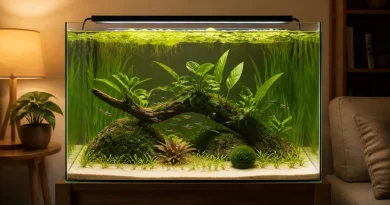
Aquascaping for beginners is easier than it looks. With the right tank, a simple plan and a few hardy plants, you can build a living underwater landscape in a single weekend. This guide walks you through every step, from choosing equipment to your first trim.
You do not need expensive CO2 systems or rare plants to start. Many stunning aquascapes use low-light plants, a few stones and a piece of driftwood. What matters most is patience and a good routine.
What Is Aquascaping?
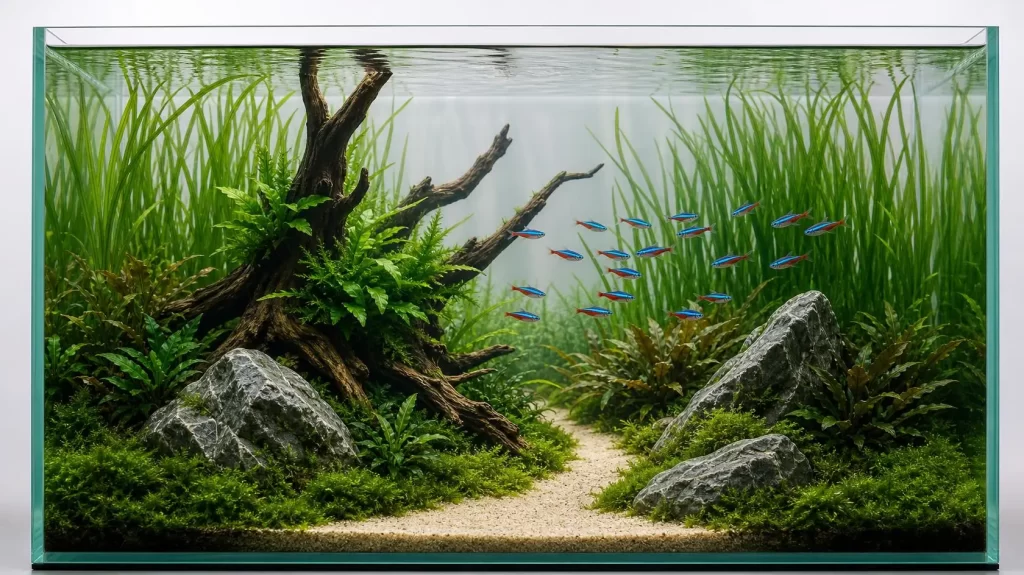
Aquascaping is the art of arranging aquatic plants, rocks, driftwood and substrate inside an aquarium to create a natural-looking scene. Think of it as underwater gardening combined with landscape design.
A good aquascape balances three things:
- Design: layout, depth and focal points that please the eye
- Biology: healthy plants, stable water and beneficial bacteria
- Livestock: fish and shrimp that suit the plants and tank size
Why Start Aquascaping?
- Live plants absorb nitrates and compete with algae, so water stays cleaner
- Planted tanks give fish shelter, which lowers stress and brings out natural colour
- It is a calming, creative hobby that rewards small daily attention
Aquascaping Equipment You Need
You need eight basic items to start a planted tank. Buy quality where it counts (light and filter) and save on the rest.
| Item | What to Choose | Why It Matters |
|---|---|---|
| Tank | 60–100 litres (15–25 gallons), rimless if possible | Larger tanks keep water stable and forgive mistakes |
| Light | Planted-tank LED sized to your tank length | Plants cannot grow without the right light intensity |
| Filter | Canister or hang-on-back, rated 5–10x tank volume per hour | Moves nutrients and keeps water clear |
| Substrate | Aqua soil, or inert sand/gravel with root tabs | Feeds root plants and anchors them |
| Hardscape | Stones (seiryu, dragon stone) and driftwood | Creates the structure of the scape |
| Heater | Adjustable, about 1 watt per litre | Most tropical plants and fish need 22–26°C |
| Tools | Long tweezers, curved scissors, spatula | Planting and trimming without disturbing the scape |
| Water conditioner | Dechlorinator | Removes chlorine and chloramine from tap water |
Do Beginners Need CO2?
No. A low-tech tank with low-light plants grows slower but needs far less maintenance and is much less prone to algae. Add pressurised CO2 later, once you understand how light, nutrients and plant growth interact.
What Tank Size Is Best for Beginners?
A 60-litre (about 15-gallon) tank is the sweet spot. Nano tanks under 30 litres look appealing, but small water volumes swing quickly in temperature and chemistry, which stresses plants and fish.
Choosing an Aquascaping Style
Pick one style before you buy hardscape; it decides which stones, wood and plants you need. Nature and jungle styles are the most forgiving for beginners.
| Style | Look | Difficulty | Best For |
|---|---|---|---|
| Nature Aquarium | Natural landscapes, popularised by Takashi Amano | Easy–Medium | Most beginners |
| Jungle | Dense, wild, overgrown planting | Easy | Low-tech tanks |
| Iwagumi | Minimal stones with a single carpet plant | Hard | Experienced scapers with CO2 |
| Dutch | Rows of colourful stem plants, no hardscape | Hard | Plant-focused hobbyists |
| Biotope | Recreates a real river or lake habitat | Medium | Fish-focused keepers |
Basic Design Rules to Follow
- Rule of thirds: place your main focal point about one-third from the left or right, not dead centre.
- Create depth: short plants at the front, medium in the middle, tall at the back.
- Use odd numbers: three or five stones look more natural than two or four.
- Leave open space: a sandy path or open water area makes the tank feel larger.
How to Aquascape: Step-by-Step Guide
Follow these 10 steps in order. Most beginners finish the build in one day, then wait 4–6 weeks for the tank to cycle before adding fish.
Step 1: Plan Your Layout
Sketch your tank from the front on paper. Mark where the main stone or wood goes, where tall and short plants sit, and where open space will be. Collect a few reference photos of scapes you like.
Step 2: Place the Tank and Clean It
Set the tank on a level, sturdy stand away from direct sunlight, which feeds algae. Rinse the glass with plain water only; never use soap.
Step 3: Add the Substrate
Spread aqua soil 5–8 cm deep. Slope it higher at the back (about 8–10 cm) and lower at the front (about 3–4 cm) to create depth. If you use inert sand, push root tabs under where root-feeding plants will go.
Step 4: Arrange the Hardscape
Place your largest stone or driftwood first, at your focal point. Add smaller pieces around it to support the shape. Soak driftwood for a few days beforehand so it sinks and releases fewer tannins.
Step 5: Spray and Plant
Mist the substrate so it is damp but not flooded. Use tweezers to push plants about 2–3 cm into the soil, angled slightly. Plant densely from day one; more plants mean less room for algae.
Step 6: Attach Epiphytes
Java fern, anubias and mosses do not go in the substrate. Tie them to rock or wood with cotton thread, or use a drop of cyanoacrylate gel glue. Burying their rhizome will rot it.
Step 7: Fill the Tank Slowly
Lay a plastic bag or plate on the substrate and pour water gently onto it. This stops the soil from clouding and keeps plants in place. Add water conditioner as you fill.
Step 8: Install Filter, Heater and Light
Hide the filter intake and outlet behind hardscape or plants. Set the heater to 24–25°C. Run the light for 6 hours a day at first, then increase to 7–8 hours after the first month.
Step 9: Cycle the Tank
Cycling grows beneficial bacteria that turn toxic ammonia into safer nitrate. It takes about 4–6 weeks. Test water weekly; the tank is cycled when ammonia and nitrite both read 0 ppm.
Step 10: Add Livestock Gradually
Start with a clean-up crew such as Amano shrimp or nerite snails. Add small, peaceful fish a few at a time over several weeks so the bacteria can keep up.
Best Aquascaping Plants for Beginners
These ten plants grow in low to medium light without CO2 and tolerate beginner mistakes. Mix a few from each position for a balanced scape.
| Plant | Position | Light | Growth | Notes |
|---|---|---|---|---|
| Java Fern | Midground (on wood/rock) | Low | Slow | Never bury the rhizome |
| Anubias Nana | Foreground/midground (on wood/rock) | Low | Slow | Almost indestructible |
| Java Moss | Anywhere (attached) | Low | Medium | Great for trees and walls |
| Cryptocoryne wendtii | Foreground/midground | Low | Slow | May “melt” at first, then regrows |
| Amazon Sword | Background | Medium | Medium | Heavy root feeder; use root tabs |
| Vallisneria | Background | Low–medium | Fast | Spreads by runners |
| Hornwort | Background or floating | Low | Very fast | Excellent algae competitor |
| Dwarf Sagittaria | Foreground | Medium | Medium | Easy carpet alternative without CO2 |
| Bucephalandra | Midground (on rock) | Low | Slow | Colourful, compact leaves |
| Amazon Frogbit | Floating | Medium | Fast | Shades the tank and absorbs nitrates |
Plants to Avoid as a Beginner
Skip high-demand carpets like Monte Carlo, HC Cuba and dwarf hairgrass until you add CO2. Also avoid “aquarium plants” sold in pet shops that are actually land plants, such as mondo grass and dracaena; they rot underwater.
Aquascape Maintenance Routine
A planted tank needs about 30 minutes a week. Consistency matters more than effort.
Daily (2 minutes)
- Check that the light, filter and heater are running
- Feed fish a small amount they finish within 2 minutes
Weekly (20–30 minutes)
- Change 30–50% of the water in the first month, then 25–30% weekly
- Remove dead or yellow leaves
- Wipe algae off the glass
- Dose liquid fertiliser as the label directs
Monthly
- Trim stem plants and replant the healthy tops
- Rinse filter media in old tank water, never tap water, to keep bacteria alive
- Replace root tabs every 2–3 months near heavy root feeders
Common Aquascaping Mistakes to Avoid
Most beginner failures come from too much light, too few plants or too much impatience.
- Running the light too long. More than 8 hours a day in a new tank invites algae. Start at 6 hours.
- Planting too sparsely. Bare substrate gives algae room to grow. Fill at least 60–70% of the area on day one.
- Skipping the cycle. Adding fish to an uncycled tank causes ammonia spikes and fish loss.
- Overfeeding. Leftover food breaks down into ammonia and fuels algae.
- Burying rhizomes. Java fern and anubias rot when their rhizome is planted in substrate.
- Changing too much at once. Adjust one thing (light, fertiliser, CO2) at a time, then wait a week to see the result.
- Choosing fish before plants. Goldfish, large cichlids and silver dollars eat or uproot most plants.
Frequently Asked Questions
How much does it cost to start aquascaping?
A basic 60-litre low-tech setup typically costs about ₹10,000–₹20,000 (roughly $120–$250), including tank, light, filter, substrate, hardscape and plants. Costs rise with CO2 systems and premium lights.
How long does an aquascape take to grow in?
A low-tech aquascape usually takes 2–3 months to look full. Tanks with CO2 can grow in within 4–6 weeks.
Can I aquascape without CO2?
Yes. Choose low-light plants such as java fern, anubias, cryptocoryne and mosses. Growth is slower, but the tank is more stable and easier to maintain.
What is the easiest aquascaping style for beginners?
The jungle style is the most forgiving because it uses hardy plants and does not need precise trimming. The nature aquarium style is a close second.
Can I use regular gravel for a planted tank?
Yes, if you add root tabs for root-feeding plants and use liquid fertiliser for the rest. Aqua soil is easier because it contains nutrients from the start.
When can I add fish to my new aquascape?
Add fish only after the tank has cycled, usually 4–6 weeks. Ammonia and nitrite should both test at 0 ppm.
Conclusion
Aquascaping for beginners comes down to a few simple habits: plan your layout, plant densely, keep the light moderate and let the tank cycle before adding fish. Start with hardy low-tech plants, follow a weekly maintenance routine, and your aquascape will mature into a healthy, natural underwater landscape.
Ready for the next step? Explore our guides to the best low-light aquarium plants and how to fix algae in a planted tank.