Aquascaping for Beginners: Step-by-Step Guide
It’s easier than it looks. With a plan, correct tank size, and few plants, you can build a living underwater world landscape in a few days or weeks. This guide helps you through every step, from choosing the right equipment to your first plant trimming.
You don’t need an expensive CO2 system or specific plants to start aquascaping. Many awesome aquascapes use low-light plants and a few stones and pieces of driftwood. What matters most is the care and a routine.
What Is Aquascaping?
It’s an art of setting up aquatic plants, rocks, substrate, and driftwood inside the aquarium to create a natural scene. Think of it as underwater gardening combined with landscape design.
A good aquascape balances 3 things:
- Design: Layout and depth that feel good and please the eye
- Biology: Healthy live plants, stable water, and beneficial bacteria
- Livestock: Fish species or shrimp that suit the plants and tank size
Why Start Aquascaping in Tank?
- Plants helps to keep water and tank clean and also absorb nitrates and reduces algae from the aquarium tank.
- Plants in tanks provide fish with shelter. This helps reduce stress and bring out the natural colors of the fish.
- It’s a calming and creative hobby.
8 Aquascaping Equipment You Need to Setup
You need 8 basic items to start a planted tank with fish or shrimp. Buy quality items, it’s more durable for long-term use.
| Item | What to Choose | Why It Matters |
|---|---|---|
| Tank | 30–50 gallons, rimless tank | Larger tanks keep water stable |
| Light | LED sized to tank length | Difficult to grow without the right light intensity |
| Filter | Canister or hang-on-back, water rotation 10x tank volume per hour | Nutrients and clear water |
| Substrate | Aqua soil, sand/gravel | Root plants and anchors |
| Hardscape | Stones and driftwood | Creates scape |
| Heater | Adjustable | Maintain 22–26°C |
| Tools | Long tweezer and curved scissor | Planting and trimming planmts without disturbing the scape |
| Water Conditioner | Beneficial Bacteria | Removes chlorine from tap water |
Do Beginners Need CO2 to Setup Aquascape?
No. A low-tech tank setup with low-light plants grows slowly and stays stable. Little maintenance and no brown or green algae issues. You can add CO2 to the tank, once you understand how nutrients, and plant growth work together.
Best Tank Size for New Setup or Beginners?
20-gallon tank is the best choice for new setup or learning purpose. Tanks under 15 gallons look amazing, but less water volumes change temperature quickly, which can stress the plants and fish in the tank.
Choosing an Correct Aquascaping Style
Imagine a style and looks before you but any materials. It will help you to decide stones, live plants, and driftwood for setting up your aquarium tank. Nature and jungle styles are the most preferred and easy to setup for beginners.
| Style | Look | Difficulty | Best For |
|---|---|---|---|
| Nature | Natural landscapes | Easy–Medium | Most beginners |
| Jungle | Wild and overgrown planting | Easy | Low-tech tanks |
| Iwagumi | Less stones and carpet plant | Hard | Experienced aquascapers with CO2 |
| Dutch | Colourful stem plants, no hardscape | Hard | Plant-focused |
| Biotope | Real river or lake habitat | Medium | Fish-focused |
Design Rules to Follow for Aquascaping
- Third Rule: Start from the left or right and not from the center. Need a slope design in aquascape.
- Depth: Set small and short plants on the front side, medium in the middle, and large or tall plants at the back.
- Odd Number: 1, 3, 5, or 7 stones look more natural instead of putting matching numbers.
- Open Space: Keep space in the aquascape; it looks good and feels big.
How to Aquascape in an Aquarium Tank
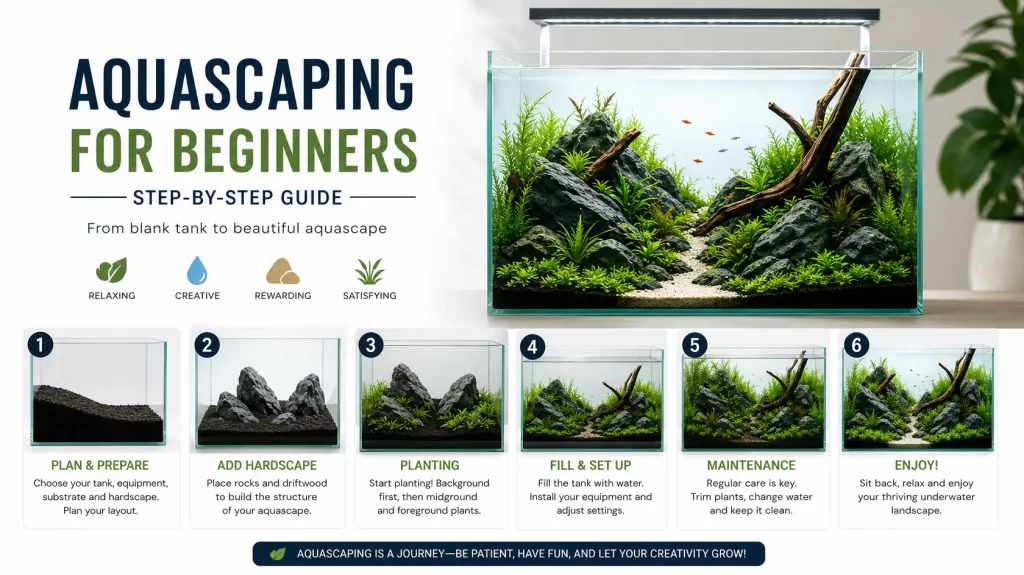
Follow these 10 steps in order to build the aquascape in the tank. Most people finish it in a day or two. Before adding fish, always cycle your tank first.
1: Layout
Design in mind or on paper. Identify stone designs or driftwood and where they go in the tank. Manage small and tall plants according to the design and keep open space for a clean layout.
2: Tank Placement and Cleaning
Set the tank in any direction except south. Keep it away from direct sunlight; it will lead to algae growth in the tank. Always rinse the glass with water; don’t use any chemicals.
3: Choosing the Right Substrate
Always use sand or specific soil to create the base. Keep it lower in the front and then increase the height of the scape toward the back. Set plants that grow best in a specific environment and soil.
4: Slowly Fill the Tank
Add a plastic bag on the aquascape so it doesn’t get messy while adding water. It will help create less cloudy water, and the plants will stay in place. Add water conditioner as needed.
5: Filter, Tank Cycle, and Livestock
Hide the filter or its intake and outlet behind the aquascape or stones. Set the heater and don’t keep the light on for more than 6 hours a day. Cycling the tank will help grow beneficial bacteria in the tank. Test the water weekly or bi-weekly. Start with shrimp or small fish species.
Top 5 Aquascaping Plants for Beginners
These 5 plants required low light and without CO2. These plants can tolerate mistakes and require less maintenance.
| Plant | Position | Light | Growth | Notes |
|---|---|---|---|---|
| Java Fern | On wood or rock | Low | Slow | Easy to care |
| Anubias | On wood or rock | Low | Slow | East to care |
| Java Moss | Anywhere in tank | Low | Medium | Aquarium walls |
| Cryptocoryne wendtii | Bottom or middle | Low | Slow | Easy to care |
| Amazon Sword | Background | Medium | Medium | Hard to set |
Avoid Plants as a Beginner
Don’t use high-quality or carpet plants like Monte Carlo, Cuba, or Hairgrass because these plants require CO2. Try to avoid plants that are sold by pet shops. They are land or outdoor plants, and they get rotten underwater.
Avoid Common Aquascaping Mistakes
Beginners fail when they keep too much light, fewer plants, and impatience.
- Light Timing: Not more than 7 hours a day. It will start creating algae if kept on for more hours.
- Plant Spacing: At least fill 70-80% with the plants because naked areas will help algae to grow in the substrate.
- Skipping Cycle: Adding fish to an uncycled tank leads to an ammonia spike in the aquarium tank.
- Feeding Proportion: Feed as much as your fish can complete within a few minutes. Remove any leftover food. Leftover food goes down and causes an ammonia spike.
- Changing Too Much: Change one at a time. Change water, substrate, or filter at a time. Don’t change everything at once.
Conclusion
These simple habits will help new aquascapers to create a healthy tank. Plan layout and start with low-maintenance plants. Follow weekly routine, and your aquascape will be unbelievable.